
Why Choose a Portable Power Station With Solar Panel?

Time:2026-10-15 Author:Charlotte
0%

A Portable Power Station With Solar Panel can turn sunlight into practical backup power. It supports phones, laptops, lights, cameras, and small medical or household devices during outages or outdoor trips. Unlike a fuel generator, it operates quietly and produces no direct exhaust while charging or running compatible equipment.

The real value depends on careful matching. Battery capacity, measured in watt-hours, indicates how long the station may run a device. Continuous output matters too, especially for refrigerators, pumps, or tools with demanding motors. Solar charging adds flexibility, but panel performance changes with cloud cover, temperature, angle, and shade. A bright afternoon may still produce less power than expected.

That detail matters.

Reliable buying decisions should consider battery chemistry, inverter efficiency, charging speed, port types, weather resistance, and verified safety certifications. Manufacturer specifications provide a starting point, while independent testing can reveal real-world limitations. For example, a 500-watt-hour unit may recharge several phones, power LED lights overnight, or operate a small cooler for limited hours. It will not necessarily run every appliance in a home.

Some buyers focus only on capacity and overlook weight. Others expect a solar panel to recharge the battery quickly in every season. That expectation needs review. A thoughtful choice balances emergency needs, travel habits, sunlight availability, and budget. It also leaves room for uncertainty, because advertised performance rarely matches every household situation. With realistic planning, this technology can offer cleaner, quieter, and more dependable portable energy.
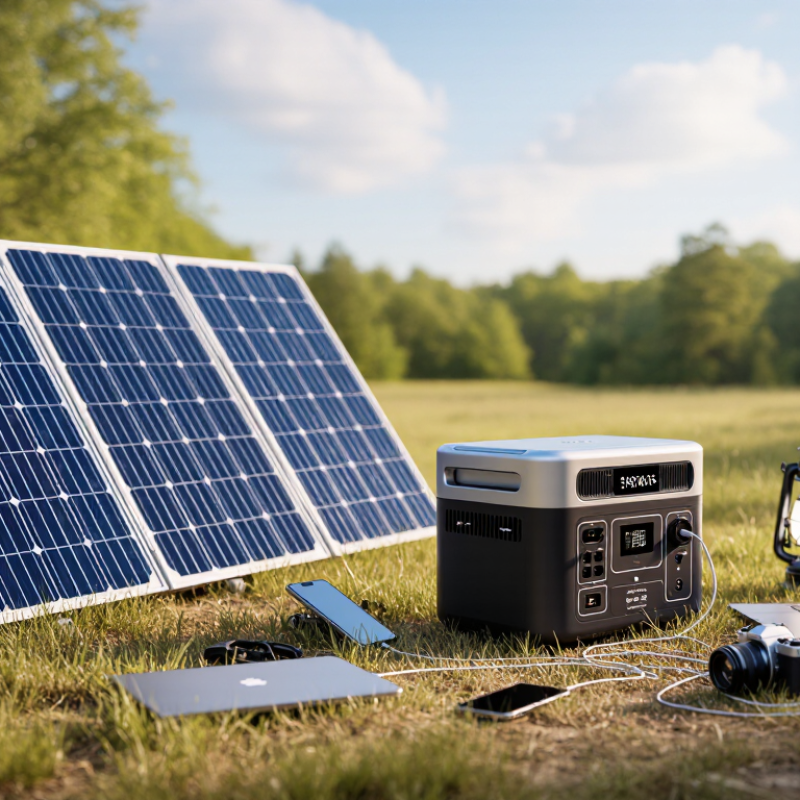
Why Choose a Portable Power Station With Solar Panel?

What Is a Portable Power Station With a Solar Panel?

A portable power station with a solar panel is a rechargeable battery system designed for temporary, off-grid electricity. It usually combines a lithium battery, inverter, charging ports, and a solar input. The panel converts sunlight into direct current, while the inverter supplies alternating current for compatible appliances. In simple terms, it stores daytime energy for later use.

The battery capacity is measured in watt-hours, or Wh. A 500Wh unit might run a 50W lamp for nearly ten hours, before conversion losses. Real performance is lower. The label can flatter reality. Inverter efficiency, battery condition, temperature, and standby power all reduce usable energy. The U.S. Department of Energy explains that solar output changes with sunlight intensity, shading, orientation, and system temperature. A panel beside a bright window may produce far less than its rated capacity.

Solar technology is expanding rapidly. The International Energy Agency reported that global solar photovoltaic additions reached about 420 gigawatts in 2023, showing the scale of modern solar deployment. However, a small portable panel is not a miniature power grid. Charging may take many hours under weak sunlight. NREL’s PVWatts guidance also stresses that local weather and panel positioning affect actual generation. Users should check continuous output, surge capacity, battery chemistry, charging time, and weather resistance. A simple setup helps: place the panel in direct sun, keep vents clear, and monitor the battery during use. Mistakes happen. A higher capacity does not always mean better portability.

How Solar Charging Works With a Portable Power Station

Why Choose a Portable Power Station With Solar Panel?

Solar charging begins when photovoltaic cells convert sunlight into direct current. The panel sends this energy through a charge controller, which regulates voltage before storing it in the power station’s battery. Most systems use maximum power point tracking to adjust continuously as sunlight changes. Clouds matter. So does shade from one thin branch.

The battery stores DC electricity, while the built-in inverter converts it into AC power for appliances. USB outputs usually draw power more efficiently because they avoid that conversion. According to NREL’s PVWatts documentation, a typical photovoltaic system may account for about 14% in total system losses. Portable setups can lose more through cable resistance, heat, dust, and imperfect panel angles. The numbers are never perfectly clean.

A 200-watt panel will not always deliver 200 watts. Under strong midday sunlight, it may approach that rating, but morning light can produce far less. The International Energy Agency reports that solar photovoltaic additions reached roughly 420 gigawatts globally in 2023, showing how rapidly solar technology is scaling. Yet a small portable panel still depends on local conditions. Place it in full sun, keep vents clear, and check the display rather than trusting estimates. A practical test is simple: record battery gain for one hour, then repeat under different skies.

Key Benefits for Home, Travel, and Emergency Use

A portable power station with a solar panel can support daily life without depending entirely on a wall outlet. At home, it can keep a router, phone, lamp, or medical communication device running during a power cut. The battery stores energy quietly, while the panel replenishes it during daylight. That matters. A small unit may also reduce the need for fuel-based backup equipment in apartments or tight outdoor spaces.

For travel, this setup offers practical flexibility. It can recharge cameras, laptops, GPS devices, and coolers at a campsite or remote work area. Before leaving, check the station’s watt-hour capacity and output limits. A laptop may run for several hours, but a heater can drain the battery quickly. Weather changes. Cloud cover and shade can reduce solar charging, sometimes more than expected. Positioning the panel carefully helps, although perfect sunlight is not always available.

During emergencies, stored power can preserve communication and basic lighting when infrastructure fails. Choose a model with overload protection, clear battery indicators, and safe charging instructions. Keep it dry, ventilated, and away from damaged cables. In practical use, convenience is the strongest benefit, but solar charging is not instant. I once underestimated how long a partly cloudy afternoon would take to refill a battery. That mistake showed me that preparation matters as much as capacity. A realistic backup plan should include lower power use and a charged reserve before bad weather arrives.

Important Features to Consider Before Choosing One

Choosing a portable power station with a solar panel requires more than checking battery capacity. Consider how you will use it. A 500Wh unit may run lights, phones, and a small cooler overnight. It may not support a high-powered heater for long. Check continuous output and surge output carefully. Some appliances need extra power when starting. I once overestimated capacity during a weekend trip, and the battery emptied before sunrise.

Solar input is equally important. Compare the panel’s rated wattage with the station’s maximum solar charging limit. A large panel may not charge faster if the station cannot accept its output. Check charging time in realistic sunlight, not only laboratory conditions. Cloud cover, shade, dust, and panel angle reduce performance. A built-in MPPT controller can improve charging efficiency. Confirm the input voltage range before connecting equipment.

Tips: Choose lithium iron phosphate batteries when long cycle life and improved thermal stability matter. Look for clear display readings, overload protection, temperature control, and several outlet types. Weight also matters. A compact handle feels helpful until a 20-kilogram unit reaches a steep campsite. Check warranty terms and safety certifications from recognized testing organizations. Do not ignore noise levels. Some cooling fans become distracting at night. My judgment is still imperfect, so I compare actual appliance ratings with the station’s specifications before every purchase.

How to Select the Right Solar Power Station for Your Needs

Choosing the right solar power station starts with your actual loads, not the largest battery available. List each device, its wattage, and daily use time. A 60-watt laptop running for five hours needs about 300 watt-hours before conversion losses. Add a practical 20% margin for cold weather, aging, and forgotten accessories. I still overestimate my needs sometimes.

Check continuous output and surge output separately. A refrigerator may use modest running power but demand a sharp startup surge. Choose an inverter that handles both figures safely. Battery capacity matters, but usable capacity matters more. Ask for rated watt-hours, battery chemistry, cycle-life testing, and warranty conditions. Marketing numbers can look impressively precise.

Solar input determines how quickly the station recovers. Compare the panel’s rated watts with the station’s maximum solar charging limit. NREL’s PVWatts guidance notes that weather, shading, tilt, orientation, and system losses affect real production. A 200-watt panel will rarely deliver 200 watts continuously. The International Energy Agency reported that solar PV represented about 75% of global renewable capacity additions in 2023, showing strong industry momentum, not guaranteed household output. For field use, favor foldable panels, clear connectors, and an MPPT controller. Test the setup beside a window first. Cloudy afternoons expose weak assumptions.

FAQS

How does solar charging work with a portable power station?

Photovoltaic cells convert sunlight into direct current. A charge controller regulates voltage before the battery stores energy. An inverter later changes DC into AC power for appliances.

Will a 200-watt solar panel always produce 200 watts?

No. Strong midday sunlight may approach its rating. Morning light, clouds, dust, shade, and poor angles reduce output. Check the station’s display instead of trusting estimates.

How much energy can a portable power station provide?

Capacity is measured in watt-hours. A 500Wh unit may run phones, lights, and a small cooler overnight. A powerful heater can drain it quickly. I once estimated badly.

What should I check besides battery capacity?

Check continuous output and surge output. Some appliances need extra power when starting. Compare appliance ratings with the station’s specifications. This small check prevents disappointing trips.

Does the panel’s wattage determine charging speed?

Not by itself. The station has a maximum solar input limit. A larger panel may not charge faster than the station can accept. Confirm the input voltage range.

Why are USB devices often more efficient?

USB outputs usually use stored DC electricity directly. They avoid the inverter’s conversion step. AC appliances require conversion, which creates additional energy loss.

Which battery features may matter during outdoor use?

Lithium iron phosphate batteries can offer long cycle life and improved thermal stability. Also look for temperature control and overload protection. Safety matters more than impressive numbers.

How can I test real solar charging performance?

Record the battery level after one hour in full sun. Repeat under cloudy or shaded conditions. Keep vents clear and adjust the panel angle. The result may surprise you.

Conclusion

A Portable Power Station With Solar Panel combines a rechargeable battery, power outlets, and solar charging capability in one flexible energy system. The solar panel converts sunlight into electricity, which is regulated and stored in the power station for later use. This makes it useful when access to a wall outlet is limited, whether at home during an outage, while traveling, camping, or preparing for unexpected situations. It can power essential devices such as phones, lights, small appliances, and communication equipment without relying entirely on the electrical grid.

When choosing a solar power station, consider battery capacity, output wattage, charging speed, solar panel efficiency, portability, durability, and the types and number of available ports. Safety features, display information, expandability, and ease of maintenance are also important. The right model should match your expected energy needs, usage duration, available sunlight, and preferred transport method, offering a practical balance between performance, convenience, and reliable backup power.

Charlotte

Charlotte

Charlotte is a seasoned marketing professional with a deep understanding of the company's portfolio and a passion for elevating its presence in the market. With a keen eye for detail and a commitment to excellence, she ensures that our professional blog is regularly updated with insightful articles......