
How to Choose the Best Foldable Solar Panel?

Time:2026-10-23 Author:Liam
0%

Solar power is no longer limited to rooftops and utility-scale fields. According to the IEA Renewables 2024 report, global renewable capacity is expected to grow by nearly 5,500 gigawatts between 2024 and 2030, with solar photovoltaics driving most of that expansion. The IEA PVPS Trends 2024 report also recorded more than 440 gigawatts of new solar capacity installed worldwide in 2023. These figures show strong market momentum, but they do not automatically identify the right portable panel for your needs.

A Foldable Solar Panel can turn a sunny campsite, balcony, or roadside rest area into a practical charging station. Yet performance depends on more than its advertised wattage. Real output changes with sunlight angle, temperature, shading, cable losses, and battery compatibility. Weight matters. A 200-watt panel may sound impressive, but carrying it across uneven ground can quickly become inconvenient. The best choice balances conversion efficiency, folded size, durability, connector design, warranty support, and verified power performance. Look for testing details rather than attractive packaging. Independent data from laboratories such as NREL reminds buyers that rated conditions rarely match everyday use. No panel is perfect. Some specifications remain difficult to compare because manufacturers use different testing methods. This guide examines those gaps carefully, using practical selection criteria and credible industry evidence. It also considers an uncomfortable question: a cheaper panel may cost more when poor durability, slow charging, or replacement needs are included. The goal is not to promote the largest model, but to identify the most dependable Foldable Solar Panel for your actual routine.
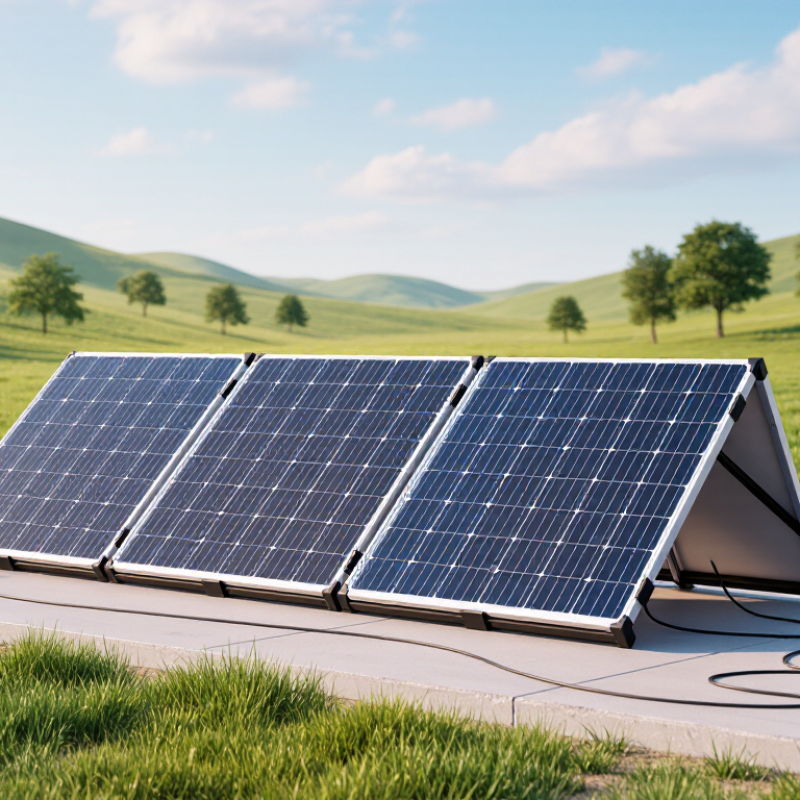
How to Choose the Best Foldable Solar Panel?

What Is a Foldable Solar Panel? Key Terms, Types, and 1000 W/m² STC

A foldable solar panel is a portable photovoltaic system designed to collapse for transport and storage. It usually combines two or more panels with hinges, cables, and a support stand. Some models use rigid glass panels, while others use flexible laminates. Rigid designs often resist scratches better, but flexible designs weigh less. Fabric-covered versions can pack into a narrow case. They may, however, suffer more from bending and heat.

Several terms matter when choosing one. Wattage indicates potential power under laboratory conditions. Voltage and current must match your power station or battery controller. Efficiency describes how much sunlight becomes electricity. Monocrystalline cells commonly offer strong efficiency in a compact area. Thin-film cells can perform better in weak light, but they usually need more surface space. Check the connector type, folded size, cable length, and stand stability. Small details matter outdoors.

The reference value is 1000 W/m² STC, or Standard Test Conditions. STC assumes 25°C cell temperature and an air mass of 1.5. It helps compare panels fairly. It does not promise the same output on a campsite. Cloud, dust, angle, shade, and hot surfaces reduce production. I once judged a panel only by its wattage. That was too simple. A smaller panel with a reliable stand may produce more useful energy than a larger panel lying flat. Measure your daily demand, carrying distance, and available sunlight before deciding. Even a clear afternoon can deliver less than the label suggests.

How to Choose the Best Foldable Solar Panel?

Estimated electrical output at Standard Test Conditions (STC: 1,000 W/m² irradiance, 25°C cell temperature, AM1.5 spectrum) based on representative module efficiencies.

How to read the chart: At 1,000 W/m², a panel’s approximate output per square metre is calculated as irradiance × efficiency. Higher-efficiency panels produce more power from the same folded or unfolded surface area, while real-world output varies with temperature, shading, orientation, and connector losses.

How to Size Panel Wattage Using 20–23% Cell Efficiency and Daily Energy Needs

How to Choose the Best Foldable Solar Panel?

Sizing a foldable solar panel starts with your daily energy demand, not the panel’s advertised size. List each device, its wattage, and daily operating hours. A 20-watt lamp used for five hours needs 100 watt-hours. Add all devices together, then include roughly 15–25% for charging losses and unexpected use.

Use this practical formula: required panel watts = daily watt-hours ÷ peak sun hours ÷ system efficiency. For example, 600 watt-hours divided by four sun hours and 0.80 efficiency equals 187.5 watts. A 200–220-watt foldable panel would provide a safer margin. Cell efficiency, usually around 20–23%, mainly affects panel size and surface area. At 22% efficiency, producing 100 watts requires approximately 0.45 square metres under standard test conditions. Real weather rarely follows the spreadsheet.

Tips: Check the panel’s actual rated output, not only its cell percentage. Place it toward the strongest sunlight, away from tree shadows and dusty ground. Keep the hinges flat and secure during wind. I have found that a slightly oversized panel charges more reliably on cloudy afternoons. Still, buying too much capacity wastes weight and storage space. Measure your battery’s input limit before choosing. Also, review the cable length, connector condition, and folding frame after several trips. Small details matter.

How Do Monocrystalline and Thin-Film Panels Compare in Real-World Output?

Choosing a foldable solar panel requires more than reading its peak wattage. Monocrystalline modules usually deliver higher power per square meter. The Fraunhofer Institute’s Photovoltaics Report 2024 places commercial monocrystalline modules around 20–23% efficiency, while common thin-film technologies often reach roughly 10–19%. On a small backpack, this difference matters. A 100-watt monocrystalline panel may occupy less space than a similar-output thin-film panel.

Real-world output is less predictable. IEA PVPS Task 13 reports typical photovoltaic performance ratios near 75–85%, after temperature, wiring, inverter, dust, and shading losses. Thin-film panels can perform better in heat because their temperature coefficients are generally less negative. In a sunny campsite, a panel lying on warm fabric may lose less power than a comparable silicon panel. Thin-film technology can also respond reasonably well under weak or diffuse light.

Still, field use exposes uncomfortable compromises. A thin-film panel may cover more surface area and remain easier to curve, but its lower efficiency can lengthen charging time. Monocrystalline folding panels often produce stronger midday output, yet partial shading can reduce their total yield sharply. Orientation matters too. I have seen a panel rated at 120 watts produce barely 70 watts when angled poorly and connected through a long cable. Ratings are laboratory values, not promises. Check measured output, weight, folded dimensions, temperature behavior, and the testing conditions behind every number.

How to Evaluate Weight, Foldability, IP Ratings, and a −0.3–0.5%/°C Coefficient

Choosing the best foldable solar panel starts with practical measurements, not advertising claims. Compare weight with usable wattage, because a lighter panel may produce less power. A two-kilogram panel producing 100 watts can be easier to carry than a heavier, higher-rated model. Check the folded size against your backpack or storage box. Hinges should open smoothly and remain flat on uneven ground. A loose fold is a warning sign.

IP ratings need careful reading. IP65 usually protects against dust and water jets, but it does not guarantee safe submersion. The rating may cover the panel body, not every connector or charging port. Inspect rubber covers and cable seals after repeated folding. Small gaps can collect grit. I would not trust a high rating without checking the installation instructions. That is where mistakes happen.

Temperature performance is easy to overlook. A coefficient between −0.3 and −0.5%/°C means output usually decreases as cell temperature rises above the test condition, often 25°C. At 45°C, a −0.4%/°C coefficient suggests roughly 8% lower output. Actual results vary with airflow, sunlight angle, and controller quality. Leave space beneath the panel for ventilation. A dark surface placed directly on hot concrete may perform worse than expected. I still prefer a slightly heavier panel with stronger supports, because fragile folds become expensive weaknesses over time.

How to Choose the Best Foldable Solar Panel? - How to Evaluate Weight, Foldability, IP Ratings, and a −0.3–0.5%/°C Coefficient

Use this comparison as a practical guide to balance portability, weather resistance, electrical performance, and real-world usability.

Generic Foldable Solar Panel Evaluation Guide
Panel Class Typical Rated Output Typical Weight Folded Size Range Foldability and Setup Recommended IP Rating Typical Power Temperature Coefficient Best Use Case Key Evaluation Point
Compact Travel Panel 40–80 W 1.2–2.4 kg Approximately 35–60 × 25–40 × 3–6 cm Usually folds into 2–4 sections; quick to carry and suitable for short deployments. IP65 or higher −0.30% to −0.50%/°C Phones, cameras, small power stations, and lightweight camping Prioritize low weight, compact folded dimensions, and an integrated kickstand or hanging points.
Portable General-Purpose Panel 90–120 W 2.5–4.5 kg Approximately 50–75 × 35–55 × 4–8 cm Commonly folds into 4 sections; offers a practical balance between output and portability. IP65–IP67 −0.30% to −0.50%/°C Weekend camping, emergency backup, and medium-sized portable power stations Check whether the quoted IP rating applies to the panel, junction box, connectors, and cable assembly.
High-Output Folding Panel 160–220 W 5.0–9.0 kg Approximately 70–105 × 45–70 × 5–10 cm Often uses 4–6 sections; setup takes longer and requires a stable, unobstructed surface. IP67 preferred −0.30% to −0.50%/°C Large power stations, RV use, and extended off-grid charging Confirm handle strength, hinge durability, cable storage, and the panel’s support stability in wind.
Rugged Outdoor Panel 80–200 W Typically 3.0–8.0 kg Varies by construction; reinforced frames usually increase folded thickness. May fold fewer times but generally includes stronger hinges, corner protection, and reinforced handles. IP67 or higher −0.30% to −0.50%/°C Frequent outdoor use, damp environments, field work, and vehicle-based travel Look for sealed connectors, corrosion-resistant hardware, abrasion-resistant fabric, and protected junction boxes.

How to read the temperature coefficient: A power coefficient of −0.30%/°C to −0.50%/°C means that output generally decreases as the cell temperature rises above the rated test temperature, commonly 25°C. For example, a −0.40%/°C coefficient corresponds to an estimated 8% power reduction at 45°C cell temperature, before considering shading, orientation, dust, and controller losses. Always verify the exact coefficient and IP rating in the product’s technical datasheet.

How to Choose Panels for Camping, Emergencies, RVs, and Off-Grid Charging

How to Choose the Best Foldable Solar Panel?

How to Choose Panels for Camping, Emergencies, RVs, and Off-Grid Charging

Choosing a foldable solar panel begins with the job, not the advertised wattage. For weekend camping, a 60–120 watt panel can replenish phones, lights, and a small power station. Check the panel’s measured output in realistic sunlight. Rated power is a laboratory number. In morning shade, my first panel produced far less than expected. That mistake taught me to compare current, voltage, and charging limits before buying.

Emergency use demands easy storage and dependable setup. Choose a folded panel with a tough handle, protected connectors, and an abrasion-resistant surface. A built-in kickstand helps on a driveway or balcony. Keep cables short when possible. Long cables waste energy. Test the panel before an outage, and record its output at noon. Small details matter.

RV charging needs a larger view. Confirm that the panel voltage suits the vehicle’s charge controller and battery system. A 200-watt panel may help, but roof shade, dust, and parking direction reduce production. For off-grid charging, calculate daily watt-hours, then add extra capacity for cloudy weather. Look for clear specifications, safety testing, and a realistic warranty. Foldable hinges can weaken over time. I still inspect mine after dusty trips, because convenience can hide wear.

FAQS

How do I calculate the panel wattage I need?

List every device, its wattage, and daily operating hours. Multiply wattage by hours for each device. Add the results together. Then add 15–25% for charging losses and unexpected use.

What formula estimates the required panel size?

Use this formula: required panel watts = daily watt-hours ÷ peak sun hours ÷ system efficiency. For example, 600 watt-hours ÷ four sun hours ÷ 0.80 equals 187.5 watts. A 200–220-watt panel gives a safer margin.

Why does cell efficiency matter?

Cell efficiency mainly affects panel size and surface area. At 22% efficiency, producing 100 watts needs about 0.45 square metres. Higher efficiency can save space. It cannot remove cloudy weather losses.

Should I trust the panel’s advertised wattage?

Treat rated wattage as a laboratory value, not a guarantee. Heat, dust, wiring, shading, and poor angles reduce output. A 120-watt panel might produce only 70 watts under poor conditions. I sometimes expect too much from the label.

How do monocrystalline and thin-film panels differ?

Monocrystalline panels usually provide more power per square metre. Thin-film panels often need more surface area for similar output. Thin-film designs can be lighter or more flexible. The trade-off is longer charging time.

Which panel type performs better in hot or weak sunlight?

Thin-film panels may lose less power in high temperatures. They can also respond reasonably well under diffuse light. Monocrystalline panels often produce stronger midday output. Actual results depend on placement and weather.

How should I position a foldable panel?

Face it toward the strongest available sunlight. Avoid tree shadows, dusty ground, and nearby obstructions. Keep the surface angled toward the sun. Small shadows matter.

What practical details should I inspect before buying?

Check the panel’s measured output, weight, folded size, and cable length. Confirm the battery’s maximum input limit. Inspect connectors for damage. Keep hinges flat and secure during wind. After several trips, examine the frame again.

Conclusion

Choosing the best Foldable Solar Panel starts with understanding how it works, what its wattage means, and how laboratory ratings differ from real-world performance. Standard test conditions use 1000 W/m² of sunlight, while actual output depends on weather, angle, temperature, and shading. To select the right size, estimate your daily energy needs and compare them with panel capacity, allowing for the typical 20–23% cell efficiency and charging losses. Monocrystalline panels generally provide higher output in limited space, while thin-film designs may be lighter and more flexible but often require a larger surface area.

Practical features are equally important. Consider weight, folded dimensions, carrying convenience, durability, and an appropriate IP rating for dust and water resistance. Panel temperature also affects performance, with output commonly changing by about −0.3–0.5% per °C as temperatures rise. The ideal choice depends on your purpose, whether camping, emergency backup, RV travel, or off-grid charging, as well as your available sunlight, storage system, and portability requirements.

Liam

Liam

Liam is a dedicated marketing professional with a profound expertise in the industry, where he excels at highlighting the unique advantages of our core products. With a keen understanding of market trends and consumer needs, Liam frequently updates our company’s professional blog, providing......