
Choosing the best Portable Power Station 1000w in China depends on more than a number on the product label. A 1,000-watt output may suit a laptop, a small refrigerator, or several camera batteries, but actual performance depends on each device’s starting demand. Capacity matters, too. A station rated near 1,000 watt-hours will not necessarily deliver that amount through every outlet, because conversion losses reduce usable energy. Small details count.
This guide examines the features that make a model practical for camping, home backup, and mobile work. We look at continuous and surge output, battery capacity, charging speed, port selection, weight, and safety protections. We also consider whether product specifications are clear and easy to verify, rather than relying on promotional claims. In China, available models, prices, and after-sales support can vary by seller, so buyers should check current listings and warranty terms before purchasing. That takes a little patience.
There is no single best option for everyone. A lighter unit may be easier to carry, while a larger battery may better serve longer outages. Neither trade-off is perfect. The right choice starts with a simple list: devices to power, their wattage, and the hours they must run. This article uses that practical approach to compare what matters and identify which Portable Power Station 1000w may fit different needs. One caveat remains: published ratings cannot replace checking your own devices and real-world usage.
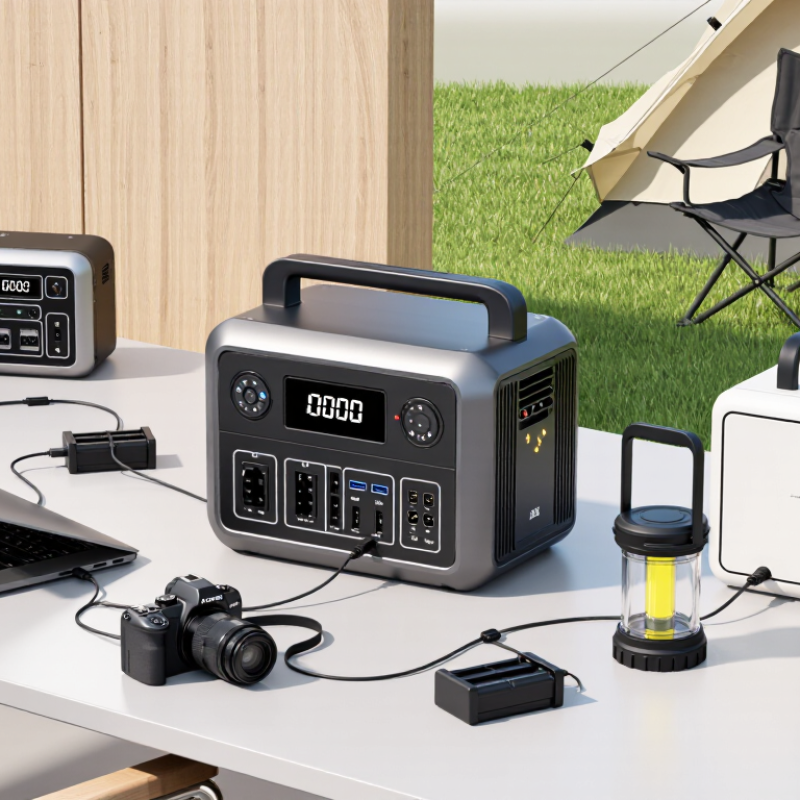
A 1000W portable power station is a rechargeable battery system with an inverter and several output ports. The 1000W figure usually describes its maximum continuous output, not how long it can run. Battery capacity, measured in watt-hours, helps estimate runtime. For example, a 500Wh unit may run a 100W device for roughly four hours under ideal conditions. Real use is shorter because conversion and standby losses consume energy. Check the device’s rated draw and startup surge before plugging it in.
Inside, the battery stores energy as direct current, or DC. The inverter converts that power into alternating current, or AC, for compatible household devices. USB and some other ports may supply DC directly. A battery management system monitors factors such as temperature and voltage to help protect the unit. Charging may use a wall outlet, vehicle outlet, or compatible solar panels. Solar charging depends on sunlight, panel capacity, and the station’s input limit. Portable does not mean unlimited.
Tips: Compare both wattage and watt-hours. Test your essential devices at home, and leave room for startup surges. Keep the station dry and well ventilated. One detail is easy to miss: the display’s runtime estimate can change as your load changes.
A 1,000-watt rating describes the power a station can deliver, not how long it will run. Battery capacity, measured in watt-hours, gives a better clue to runtime. A 100-watt lamp may run for several hours, but inverter losses and temperature reduce the usable energy. Numbers can mislead. Check continuous output as well as surge capacity before connecting appliances with motors.
For real use, match the station to a short list of devices. A laptop, router, and small fan may run together, while a high-wattage kettle can consume most of the available output. Port selection matters too: look for enough AC outlets, USB-C charging, and a clear display showing input, output, and remaining charge. Small details matter. A screen that is hard to read outdoors can make routine checks annoying.
Recharge speed, weight, and protection features shape everyday usability. A handle should feel secure when the unit is carried from a car to a campsite, and the body should allow airflow around its vents. Overload, over-temperature, and short-circuit protection are useful safeguards; check the documentation for their operating limits. Actual runtime varies with load and conditions, so treat advertised figures as estimates. I would still compare independent capacity tests, since published specifications alone leave some uncertainty.
A 1000W rating describes the power a station can deliver, not how long it will run. In China, compare rated output, battery capacity, and surge limits together. A small kettle may exceed the continuous rating, while a laptop and router can run comfortably. Numbers can mislead.
Capacity matters during a power cut or a long trip. Check the usable watt-hours, then estimate runtime by dividing that figure by the device’s draw. Real results are often lower because conversion loses energy. For example, a 700Wh unit will not provide 700Wh to every plugged-in device. Look for clear capacity specifications and test details, not just a large number on the box.
Charging speed and weight also separate 1000W models. Compare wall charging times, solar input limits, port types, and whether the unit can power several devices at once. If possible, check how it handles a steady load for an hour; a brief peak rating tells you less. Battery chemistry, operating temperature, warranty terms, and local service access deserve attention too. I would not call one model “best” without knowing the intended use. That’s the imperfect part: a light station suits weekend travel, while a heavier one may be more practical for backup at home.
What Is the Best Portable Power Station 1000W in China?
Choosing a 1000W portable power station starts with your appliances, not the number on its label. The 1000W rating usually describes maximum output, while battery capacity, measured in watt-hours, indicates how long it can run equipment. A 700W appliance may work, but it leaves limited room for other loads. Check the device’s running and startup power before buying.
Estimate your typical use. A 60W fan running for five hours needs about 300Wh, before conversion losses. A small fridge can use more or less depending on its cycling, room temperature, and age. The math helps, but real use is messier. If you can, test your key devices and leave some capacity in reserve. Also compare charging time, weight, port types, and whether the unit suits indoor use.
Tips: List the devices you need during an outage or trip. Add their wattage and expected hours, then choose capacity with a buffer. Check surge limits for motor-driven appliances. Don’t buy only for a rare worst-case scenario; a heavier unit may be less useful if you rarely move it.
What Is the Best Portable Power Station 1000W in China?
Safety, Charging, and Long-Term Care
A 1000W rating describes output, not every appliance’s starting demand. Check both the station’s continuous and peak ratings before connecting a fridge, kettle, or power tool. Keep the unit on a dry, firm surface with clear space around its vents. Heat needs room to escape. Small detail: check the cable ends. Cracked insulation or loose plugs deserve attention before use.
For charging, use a compatible charger and stay within the input limits in the manual. Place the station away from direct sun, heaters, and damp floors. Stop charging if the case becomes unusually hot, smells strange, or looks swollen; contact qualified support rather than opening it yourself. I may be cautious here, but a few minutes of checking beats guessing around electrical equipment.
For longer storage, follow the maker’s guidance on charge level and temperature. If the manual allows it, check the battery every few months and recharge when needed. Avoid leaving the station in a freezing car or a hot shed. Keep a simple note of storage checks. It is not exciting, and I sometimes forget, but regular care can help reveal changes before an urgent trip.
Estimated charging time for a hypothetical 1,000Wh power station at different input rates. The values are ideal calculations (battery capacity ÷ input power), not specifications for a particular product.
How to use this: Higher input power can reduce charging time, but real-world charging usually takes longer because of conversion losses and charge-rate tapering. When comparing 1,000W-class units, check the rated output, battery capacity, protection features, and the maker’s stated charging limits. For long-term care, follow the manual, keep the unit dry and well ventilated, and avoid prolonged storage at a fully charged or fully depleted state.
It describes the station’s output, not its runtime. Check watt-hour capacity too. Numbers can mislead.
Compare its power use with the station’s capacity. A 100-watt lamp may run for several hours, but inverter losses and temperature reduce usable energy.
Add their power needs and compare the total with the station’s continuous output. A laptop, router, and small fan may fit; a kettle could use most of the available output.
Check continuous and peak output. Motors may need extra power to start. I would not rely on the wattage label alone.
Look for enough AC outlets, USB-C charging, and a clear display for input, output, and remaining charge. Outdoor screens can be hard to read.
Use a compatible charger within the manual’s input limits. Set it on a dry, firm surface with open space around the vents.
Stop if the case becomes unusually hot, smells strange, or looks swollen. Do not open it yourself; contact qualified support.
Follow the manual’s guidance on charge level and temperature. Avoid hot sheds and freezing cars. I sometimes forget the checks, so a simple note helps.
A Portable Power Station 1000w is a compact battery system that converts stored energy into usable power for compatible appliances and electronics. When comparing 1000W models available in China, look beyond the headline output: battery capacity determines how long devices can run, while continuous and surge ratings indicate which devices the station can support. Useful features may include a variety of output ports, clear status displays, and options for charging from a wall outlet, a vehicle, or suitable solar panels.
The best choice depends on your expected devices, runtime needs, portability preferences, and budget. Estimate the power each device uses and prioritize enough capacity and output for your planned use. For reliable operation over time, follow the unit’s instructions, use compatible charging equipment, keep it dry and well ventilated, and store and recharge it as recommended. Regularly checking cables, ports, and battery condition can also help maintain safe, dependable performance.
