
Portable Solar Power is moving from emergency backup equipment toward everyday energy resilience. Buyers now expect quiet operation, safer batteries, faster charging, and dependable performance outdoors. Yet product claims can look brighter than real-world results.
The International Energy Agency’s Renewables 2024 report projects strong renewable capacity growth through 2030. Solar photovoltaic systems represent most of that expansion. IRENA’s Renewable Capacity Statistics 2025 also confirms solar’s continuing global leadership. These reports describe large-scale energy, not portable stations directly. That limitation matters. Market forecasts for portable power stations often use different definitions, testing methods, and regional samples.
Energy analyst Fatih Birol, Executive Director of the IEA, said, “The world is entering a new industrial age of clean energy technology manufacturing.” His observation fits portable systems, but manufacturing growth does not guarantee product quality. Buyers still need evidence.
This guide compares the 2026 best Portable Solar Power stations for global buyers. It examines usable watt-hours, continuous and surge output, solar-input limits, recharge time, battery chemistry, weight, noise, display accuracy, and warranty support. A bright screen is not proof of capacity. A large battery may also become inconvenient after several flights of stairs.
Real experience exposes weaknesses. Solar charging slows under clouds, dust, heat, and poor panel angles. Some models perform well indoors but struggle beside a tent. Others advertise impressive peak power for only a few seconds.
The strongest choice depends on purpose, climate, budget, and transport needs. There is no perfect unit. Careful comparison remains essential.
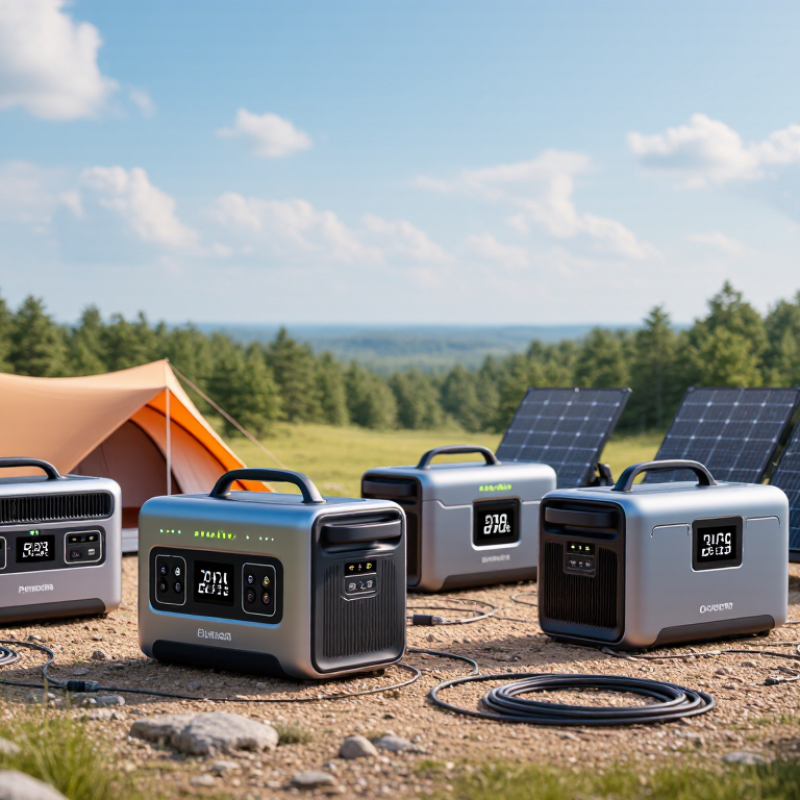
2026 Best Portable Solar Power Stations for Global Buyers
A portable solar power station is a rechargeable battery system with built-in power controls. It stores electricity for travel, emergency backup, outdoor work, and small household devices. Unlike a fuel generator, it produces no exhaust during operation. It also runs quietly, although its cooling fan may become noticeable under heavy loads.
The system normally includes a lithium battery, inverter, charge controller, display, and several output ports. Solar panels send direct-current electricity to the charge controller. The controller regulates incoming energy before it reaches the battery. When you plug in a lamp or laptop, the inverter converts stored direct current into household-style alternating current. USB ports usually supply direct current more efficiently.
Performance depends on battery capacity, solar conditions, temperature, and device demand. A 1,000-watt-hour battery cannot deliver unlimited power. Inverter losses reduce the usable amount, often by 10% or more. Cloud cover also changes charging speed. Check the output voltage, plug format, frequency, and certification requirements for your destination. These details matter for global buyers.
Use the display as a guide, not an absolute promise. Readings can fluctuate. My own buying checklist would include cycle life, continuous wattage, surge wattage, charging time, and battery replacement support. A compact unit is easier to carry, but smaller batteries require stricter planning. That trade-off is easy to underestimate.
Comparing portable solar power stations requires more than checking battery capacity. Capacity, measured in watt-hours, estimates stored energy. A 1,000Wh unit may run a small refrigerator for several hours, but actual performance depends on temperature, efficiency, and startup demand. Output power matters too. Check continuous wattage and peak surge capacity before connecting pumps, heaters, or medical equipment. A weak surge rating can cause sudden shutdowns.
Solar input is equally important for buyers in different climates. Look for the maximum solar charging wattage and acceptable voltage range. A larger input limit can shorten charging time under strong sunlight. However, cloudy weather reduces production sharply. Battery chemistry also affects service life, weight, and safety. Lithium iron phosphate cells usually offer strong cycle durability, though they can increase product weight. Review charging temperatures, protection systems, warranty terms, and regional electrical compatibility. These details often reveal more than attractive capacity claims.
Tips: Test usable runtime with your real devices, not laboratory estimates. Measure the unit’s weight before travel. Confirm that cables, plugs, and solar connectors match your region. Keep ventilation clear during heavy use. I sometimes overvalue capacity and overlook portability; that mistake matters after carrying a heavy unit across uneven ground. Also, published charging times may assume ideal sunlight. Expect slower results in winter, shade, or dusty conditions.
Portable power stations serve different needs, and capacity alone should not decide your purchase. A compact unit suits phone charging, cameras, lights, and short outdoor trips. Choose one with USB-C output and at least 200 watt-hours. It can fit under a vehicle seat. However, small batteries may disappoint during cloudy weather.
Mid-range stations usually provide 500 to 1,000 watt-hours. They can run laptops, routers, small fans, and medical monitoring devices within their approved limits. Look for pure sine-wave AC output, clear overload protection, and a solar input above 300 watts. Charging speed matters when sunlight changes quickly. In my view, this category offers the best balance for home backup and travel, although it remains too heavy for casual carrying.
High-capacity or expandable stations suit households, field workers, and emergency preparation. They can support refrigerators, communication equipment, and selected power tools. Confirm the appliance’s starting wattage, not only its running wattage. That detail prevents many failed purchases. Modular batteries add flexibility, but they also increase cost and storage weight.
Global buyers should check local plug formats, input voltage, warranty coverage, and repair access. Compliance evidence, including relevant battery transport and safety testing, deserves careful review. Solar performance also depends on heat, shade, cable length, and panel angle. Bigger is not always better. A frequent mistake is buying maximum capacity without planning daily energy use. A smaller, efficient station may work longer and travel more easily.
Global buyers should treat compatibility as a specification, not a marketing promise. Check the destination’s voltage, frequency, plug shape, and permitted charging methods. A station designed for one grid standard may need a certified adapter elsewhere. Solar input also matters. Confirm panel voltage, connector type, current limits, and performance in cloudy conditions. Portable does not mean universally compatible.
Safety requires more than a large battery capacity. Look for clear protection against overcharging, overheating, short circuits, and deep discharge. Read the safety documentation carefully. Certification marks should match the destination market and product category. Battery transport rules may restrict air shipment, especially for larger lithium batteries. Import duties, recycling obligations, and wireless regulations can also vary. Requirements change, and online listings are sometimes incomplete.
Tips: Photograph the rating label before purchase. Ask the seller for test reports and a local compliance declaration. Use only approved cables and keep ventilation openings clear. Test the station with a small load before an emergency. I have found that advertised runtime often feels optimistic, especially in cold weather or with inverter losses. That detail deserves more attention. Also, regional rules are not always written for portable solar equipment, so confirm requirements with customs authorities, electrical inspectors, or qualified local technicians. A careful buyer keeps these records.
Portable solar power stations should match the destination market’s nominal AC voltage and frequency. North America generally uses 120 V / 60 Hz, while most European, Asian, African, and Oceanian markets use 220–240 V / 50 Hz. Japan is a special case with 100 V and regionally different frequencies. Buyers should also verify plug type, grounding, residual-current protection, transport rules for lithium batteries, and applicable local certification requirements before use.
Reference basis: commonly published nominal mains values from IEC World Plugs and national electrical-system guidance. Actual requirements may vary by country and installation.
Choosing the right portable solar power station in 2026 starts with your actual energy routine, not the largest advertised battery. Estimate daily use in watt-hours: a laptop, medical device, refrigerator, or lighting system each demands different capacity. Add a practical reserve of 20–30 percent. A higher capacity is not always better. Heavy units can become difficult to move during travel or emergencies.
Check continuous output and surge output separately. A refrigerator may start with a brief power spike, while a laptop needs steady power. Confirm the solar input range, charging speed, battery cycle rating, and low-temperature performance. Lithium iron phosphate batteries usually offer strong cycle life, but performance still changes in extreme heat or cold. Read technical sheets carefully.
Global buyers should verify outlet standards, input voltage, cable types, and local certification requirements before payment. Shipping batteries across borders may involve extra documentation or restrictions. Confirm warranty coverage, repair access, and replacement policies in your country. Look for clear safety protections, including overcharge, short-circuit, and temperature control. Water resistance helps outdoors, but it does not make a station waterproof. Small details matter.
Test the power station with your real devices before depending on it. One overlooked cable can ruin a carefully planned setup. Even experienced buyers can miscalculate refrigerator runtime, especially in cloudy weather. Recheck the numbers.
| Recommended Use Class | Nominal Battery Capacity | Estimated Usable AC Energy* | Continuous AC Output | Short-Term Surge Output | Typical Solar Input Limit | Approx. Solar Recharge Time** | Typical Weight Range | Battery Chemistry | Practical Device Examples | Best Buying Priority |
|---|---|---|---|---|---|---|---|---|---|---|
| Emergency Compact | 250–400 Wh | 210–340 Wh | 200–400 W | 400–800 W | 80–150 W | 2.5–5 hours | 3–6 kg | LiFePO4 preferred; lithium-ion also available | Phone charging, Wi-Fi router, LED lights, camera batteries, small medical accessories | Low weight, compact size, USB-C output, quiet operation |
| Weekend Essentials | 500–800 Wh | 425–680 Wh | 500–800 W | 1,000–1,600 W | 150–250 W | 2.5–5.5 hours | 6–10 kg | LiFePO4 | Small refrigerator, lights, laptops, CPAP device, portable monitor, small fan | Battery cycle life, pass-through charging, efficient inverter |
| General Camping | 900–1,200 Wh | 765–1,020 Wh | 900–1,200 W | 1,800–2,400 W | 300–500 W | 2–4 hours | 10–14 kg | LiFePO4 | Refrigerator, cooking appliances with moderate wattage, CPAP device, projector, power tools | Pure sine-wave output, balanced weight, multiple AC and USB ports |
| Home Backup Medium | 1,400–1,800 Wh | 1,190–1,530 Wh | 1,500–2,000 W | 3,000–4,000 W | 400–600 W | 2.5–4.5 hours | 15–22 kg | LiFePO4 | Refrigerator, router, lighting circuits, television, medical equipment, low-power kitchen devices | Transfer capability, UPS response, thermal management, expandable battery support |
| High-Load Backup | 2,000–2,500 Wh | 1,700–2,125 Wh | 2,000–2,400 W | 4,000–4,800 W | 500–800 W | 2.5–5 hours | 20–30 kg | LiFePO4 | Large refrigerator, sump pump with suitable starting demand, power tools, communications equipment | Surge handling, input protection, wheels or handles, local service availability |
| Extended Off-Grid | 2,800–3,500 Wh | 2,380–2,975 Wh | 2,500–3,000 W | 5,000–6,000 W | 700–1,000 W | 3–5 hours | 28–40 kg | LiFePO4 | Extended cabin use, multiple refrigerators, worksite equipment, communications and lighting loads | Modular expansion, high solar-input efficiency, weather protection, transport design |
It is a rechargeable battery system with built-in power controls. It stores electricity for travel, outdoor work, and emergency backup. It produces no exhaust during operation. Its cooling fan may become audible under heavy loads.
Solar panels send direct current to the charge controller. The controller regulates energy before charging the battery. An inverter changes stored electricity into household-style alternating current. USB ports usually use direct current more efficiently.
A compact unit can charge phones, cameras, lamps, and small accessories. Choose at least 200 watt-hours and USB-C output. It may fit beneath a vehicle seat. Small batteries need careful planning.
Mid-range systems usually offer 500 to 1,000 watt-hours. They can support laptops, routers, small fans, and approved monitoring devices. This range often balances capacity and portability. It may still feel heavy during casual travel.
Check both running wattage and starting wattage. Refrigerators and tools can require a brief power surge. High-capacity or expandable systems offer more flexibility. Bigger is not always better.
It cannot deliver the full rated capacity to every device. Inverter losses may reduce usable energy by 10% or more. Device demand, temperature, and battery condition also matter. Advertised runtime can feel optimistic.
Confirm local voltage, frequency, plug shape, and charging methods. Check solar input voltage, connector type, and current limits. Review warranty coverage and repair access. Portable does not mean universally compatible.
Look for protection against overcharging, overheating, short circuits, and deep discharge. Keep ventilation openings clear. Use approved cables only. Test the station with a small load before an emergency.
Ask for test reports and a local compliance declaration. Photograph the rating label before purchase. Larger lithium batteries may face air-shipment restrictions. Rules can change, so local authorities or qualified technicians should confirm details. My own checklist can still miss something.
Portable Solar Power stations are compact energy systems that store electricity in rechargeable batteries and can be replenished through solar panels, wall outlets, or vehicle connections. They provide a practical source of backup and mobile power for travel, outdoor activities, remote work, emergency preparedness, and temporary household needs. When comparing models, buyers should examine battery capacity, continuous and peak output, charging speed, solar input range, port selection, weight, noise level, display functions, battery lifespan, and protective features such as temperature, overload, and short-circuit control.
Different users may prefer lightweight units for personal electronics, medium-capacity systems for camping and communication equipment, or higher-capacity models for essential appliances. Global buyers should also confirm voltage, plug compatibility, charging standards, transport requirements, and applicable safety certifications in their destination market. In 2026, the best choice will balance usable capacity, portability, durability, reliable solar performance, warranty support, and total cost rather than focusing only on maximum power. Comparing real energy needs with local conditions will help each buyer select a safe, efficient, and suitable system.
